VOC & Formaldehyde Testing for Green Star Certification and WHS Compliance— Sydney
VOC & Formaldehyde Testing for Green Star Certification and Workplace Health and Safety
Volatile organic compounds (VOCs) — off-gassed from paint, adhesives, engineered wood products, carpets and office equipment — are one of the most common reasons a Green Star project struggles to demonstrate its Indoor Environment Quality credits.
Concentrations of many VOCs run consistently higher indoors than outdoors, often by a significant margin, which is exactly why the Green Building Council of Australia (GBCA) builds VOC and formaldehyde performance into several Green Star credits rather than treating it as a footnote.
Enviro Corp provides NATA-accredited VOC and formaldehyde testing, using laboratory-analysed active sampling, to support Green Star submissions across Sydney. See our full service areas.
We test for VOC exposure to support your WHS compliance obligations as part of occupational hygiene testing, investigate a specific complaint or health concern, or meet building rating scheme requirements including Green Star, LEED, NABERS, and WELL.
Call 1300 980 612.
VOC Testing for WHS Compliance
When WHS-driven VOC testing is typically required
When to test for VOC exposure:
- Following a worker complaint of headaches, dizziness, respiratory irritation, or similar symptoms with no other obvious cause
- After introducing a new process, chemical, or material with known VOC content (paints, adhesives, resins, solvents)
- As part of routine occupational hygiene monitoring where VOC-generating processes are ongoing
- To document compliance during a WHS audit or after a SafeWork improvement notice
- Post-renovation or post-construction, before staff return to a space (off-gassing from new materials)
How VOC Testing Supports Green Star Credits
Green Star assesses indoor environment quality as one of its nine core categories, and VOC-related air testing supports several specific credits:
- Indoor Air Quality — Demonstrating that ventilation and the occupied space itself keep VOC and formaldehyde concentrations within acceptable limits, verified through on-site air sampling rather than documentation alone
- Provision of Outdoor Air — Where projects use the “Comparison to Industry Standards” pathway, outdoor air provision must demonstrate an improvement
against AS 1668.2:2012 across at least 95% of the nominated area - Removing the Source of Pollutants — Confirming that specific in-space pollutant sources, such as printing and photocopying equipment, aren’t compromising air quality in occupied areas
These credits are assessed on the performance of the occupied space — actual air sampled where people work — not on the emissions profile of individual building products or materials. If your Green Star submission also needs to demonstrate compliance for specific materials or products (for example, formaldehyde emissions from engineered wood products under a manufacturer test protocol), that’s a separate product-certification pathway, typically supported by the manufacturer’s own test documentation rather than on-site air sampling — worth confirming with your Green Star assessor which pathway your project is using for each credit.
Green Star credit requirements are set and updated by the GBCA — confirm current thresholds and evidence requirements for your specific tool and registration date directly with your Green Star assessor or the GBCA’s published credit criteria.
Some of our Green Star projects
Unilodge Kensington
William Clarke College
Chullora Industrial Hub
Glenwood High School
Tallawong Public
Pursuing NABERS or WELL?
NABERS Indoor Environment Rating Support | WELL Performance Verification Readiness Testing | NABERS vs WELL vs Green Star: Which Rating Is Right for You?
Our VOC & Formaldehyde Testing Methods
We scope the appropriate method — and number of sampling locations — to the specific Green Star credit being pursued, rather than applying a one-size-fits-all test.
VOC testing is also available independently of a rating pathway — as part of your WHS obligations, or in response to an odour complaint or air quality concern. Read more about our general indoor air quality testing
| Method | Description |
|---|---|
| EPA TO-17 | Determination of Volatile Organic Compounds in Ambient Air Using Active Sampling onto Sorbent Tubes, with NATA-accredited laboratory analysis. |
| ASTM D5197 | Standard Test Method for Determination of Formaldehyde and Other Carbonyl Compounds in Air (Active Sampler Methodology). |
| EPA Method TO-11A | Determination of Formaldehyde in Ambient Air Using Adsorbent Cartridge followed by HPLC (Active Sampling Methodology). |
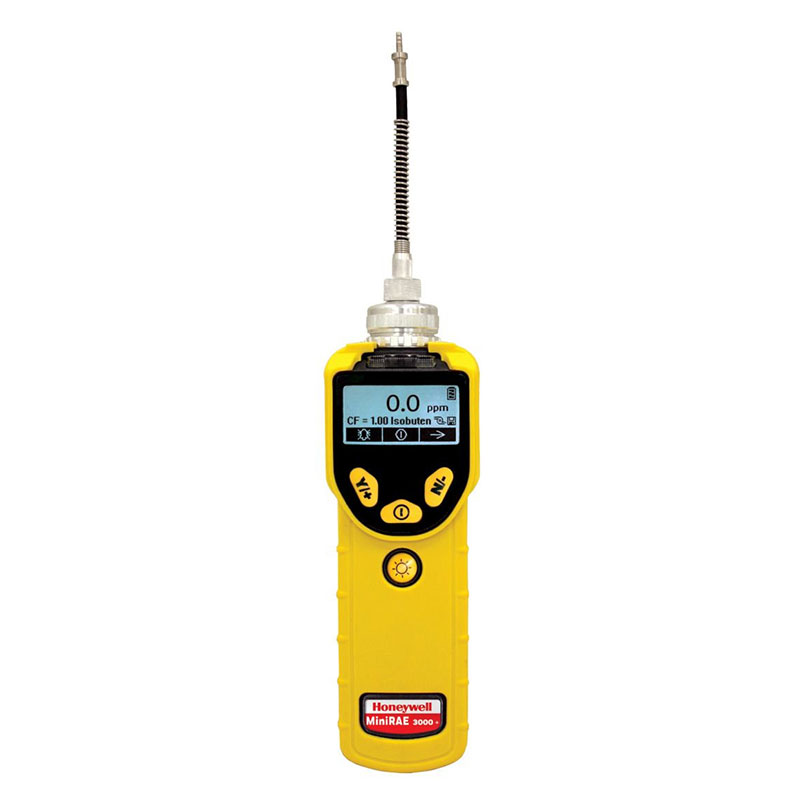
| Direct measurement | Real-time VOC readings using calibrated instruments (not applicable for Green Star). |
Note: ASTM D5197 and EPA Method TO-11A are alternative methods for formaldehyde testing — either may be used, not both.
Call us now on 1300 980 612 or complete the form below.
Drop us a few lines with your query and one of our specialists will get in touch with you. Alternatively, email us directly at admin@enviro-corp.com.au
Quick Contact
Common Sources of VOC's
When on-site air sampling identifies elevated VOC or formaldehyde levels, these are the usual culprits worth investigating in the space:
Occupant and activity sources:
- Paints, paint strippers and solvents used during recent works
- Cleansers, disinfectants and air fresheners in routine use
- Adhesives, glues and permanent markers
- Stored fuels or automotive products in adjacent areas (e.g. basement car parks)
Fixed and fit-out sources:
- New furnishings, engineered wood furniture and joinery still off-gassing
- Office equipment such as printers and copiers
- Recent construction or fit-out works where materials haven't fully cured
Testing identifies which of these — if any — is driving elevated readings in the space, so remediation (increased ventilation, source removal, scheduling) can be targeted rather than guessed at.
Health Effects of VOC Exposure
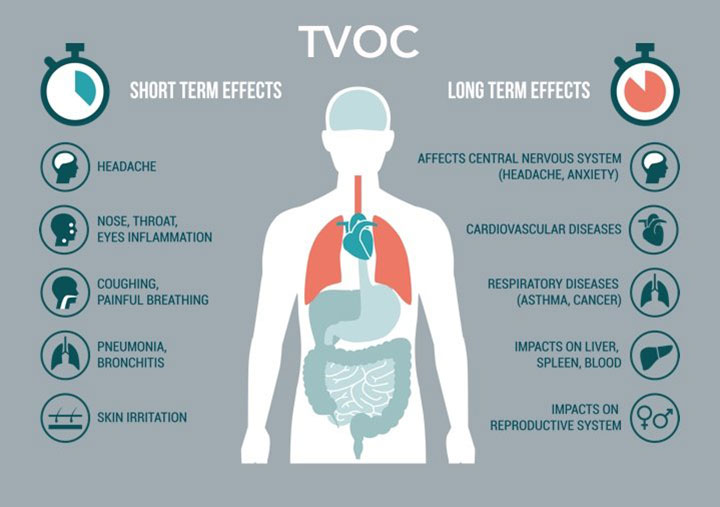
VOC toxicity varies enormously between compounds — some have no known health effect, others are established human carcinogens — but common symptoms associated with elevated exposure include:
- Eye, nose and throat irritation
- Headaches, dizziness and loss of coordination
- Nausea and fatigue
- Allergic skin reactions
- In cases of prolonged or high-level exposure, damage to the liver, kidneys and central nervous system
The extent of any health effect depends heavily on concentration and duration of exposure — which is exactly what accurate testing is designed to establish, rather than relying on assumption or complaint alone.
VOC Testing Frequently asked questions:
We confirm the correct method against your specific credit and tool version before testing
No.
Enviro Corp tests the air in the occupied space itself. Verifying the emissions profile of a
specific product (such as an engineered wood panel or adhesive) is a separate, product-
level certification process typically handled through the manufacturer’s own test
documentation — worth confirming with your Green Star assessor which pathway
applies to each credit you’re pursuing.
Yes, if relevant — VOC testing is a standard part of managing WHS obligations, and is commonly requested in
response to an odour complaint, a recent fit-out, or unexplained occupant symptoms,
independent of any certification pathway.
No — they use different sampling protocols and thresholds. A Green Star pre-handover VOC test doesn’t automatically satisfy a WHS exposure assessment, and vice versa; confirm which you need before booking.
. Laboratory-analysed active sampling (EPA
TO-17, ASTM D5197, EPA TO-11A) typically takes several business days for results once
samples reach the lab.
Across Sydney. Call 1300 980 612 or complete the form below to discuss your project
here’s no blanket legal requirement to test every workplace for VOCs, but a PCBU must ensure no worker is exposed above the Workplace Exposure Standard for specific VOCs like benzene, and must arrange air monitoring where there’s uncertainty about exposure levels or a specific risk has been identified.
Headaches, dizziness, nausea, and eye, nose, or throat irritation are common short-term symptoms — though these can also have other causes, which is why testing (rather than assumption) is the reliable way to confirm a VOC source.