• Home
  • -
  • Diesel Particulate Matter (DPM)

Diesel Particulate Matter (DPM) Testing Services Sydney NSW

ENVIRO CORP are your specialists for Diesel Particulate Matter (DPM) testing in Sydney. Call 1300 980 612 for diesel particulate matter monitoring services.

Diesel exhaust emissions contain a range of chemicals, gases and diesel particulate matter. If your workers operate around diesel-powered plant, vehicles or equipment — especially in enclosed or semi-enclosed spaces — DPM exposure is a measurable, testable risk, and one regulators are currently tightening scrutiny on.

dpm

What Is Diesel Particulate Matter?

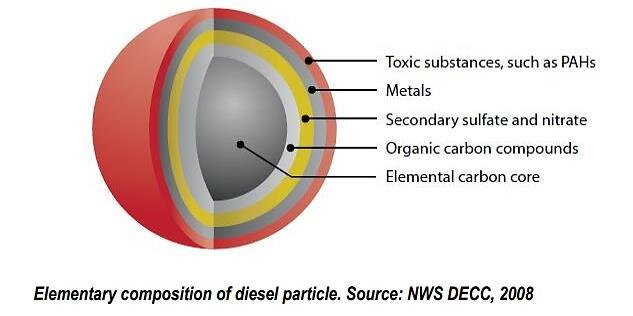
Diesel Particulate Matter (DPM) is the solid part of diesel exhaust. It comprises very small carbon particles that have absorbed layers of other materials, including:

  • Polycyclic aromatic hydrocarbons from the incomplete burning of fuel
  • Metal fragments from engine wear
  • Sulfates and nitrates from exhaust gases
  • Organic carbon compounds from engine oils and lubricants

DPM is of respirable size and, when inhaled, can penetrate deep into the lungs. Diesel engine exhaust — both the gases and particulates combined — is classified as a Class 1 carcinogen, a known cancer-causing agent.

Diesel Particulate Matter Testing Methods

Enviro Corp can undertake diesel particulate matter testing and monitoring in accordance with:

  • NIOSH 5040 — Diesel Particulate Matter (as elemental carbon)
  • Work Health and Safety Act and Regulations, which require air monitoring to determine the concentration of airborne contaminants where there's uncertainty about exposure

Testing measures the elemental carbon content of DPM in a worker's breathing zone, giving a defensible, laboratory-analysed result you can benchmark against the applicable exposure standard for your site.

Call us now on 1300 980 612 or complete the enquiry form below. Drop us a few lines with your query and one of our specialists will get in touch. What happens next: we respond fast, you get a clear obligation-free quote, we come to your site if needed, and you receive your compliance-ready report.

Call us now on 1300 980 612 or complete the form below

Drop us a few lines with your query and one of our specialists will get in touch with you.

Quick Contact

What Happens Next

  1. We respond fast.
  2. You'll get a clear, obligation-free quote.
  3. We come to you, if needed.
  4. You get your compliance-ready report.
Name(Required)
Max. file size: 400 MB.

Your information will only be used in accordance with our privacy policy to respond to your enquiry and will never be shared with third parties.

The New Workplace Exposure Limit for Diesel Particulate Matter

This is the single most important compliance change coming to diesel particulate matter testing in Australia right now. Safe Work Australia has published a new national Workplace Exposure Limit (WEL) of 0.01 mg/m³, measured as respirable elemental carbon (REC) as an 8-hour time-weighted average, taking effect on 1 December 2026. This represents a tenfold reduction from the previous de facto standard of 0.1 mg/m³.

In practice, this means:

Control measures that were adequate under the old informal 0.1 mg/m³ benchmark may fall well short of the new 0.01 mg/m³ limit — testing now is the only way to know where you currently stand. Sites operating diesel plant in enclosed or semi-enclosed environments — underground mining, construction tunnelling, warehouse logistics, waste transfer stations, ports and intermodal facilities — carry the highest risk of exceeding the new limit.
NSW coal mines currently sit under a separate standard: the WHS (Mines and Petroleum Sites) Regulation 2022 sets an 8-hour time-weighted average of 0.1 mg/m³, measured as sub-micron elemental carbon — a different measurement basis to the new national REC-based WEL. Mine operators should clarify which standard, and which measurement method, applies to their site as the December 2026 deadline approaches. Diesel exhaust remains classified as a Group 1 carcinogen by the International Agency for Research on Cancer, which is part of the reasoning behind the sharply tightened limit.

Health Effects of Diesel Particulate Matter Exposure

Eye irritation
Respiratory irritation
Headache, dizziness, nausea
Lung cancer
Bladder cancer
Cardiovascular effects

Who Needs Diesel Particulate Matter Monitoring?

Any workplace operating diesel-powered plant, vehicles or machinery — particularly in confined or poorly ventilated spaces — should be assessing DPM exposure. This includes:

Underground and surface mining operations Construction and tunnelling projects
Warehouse and logistics facilities using diesel forklifts and loaders Waste transfer stations and recycling facilities
Ports and intermodal terminals Any workplace with diesel generators, plant or vehicles operating in enclosed or semi-enclosed areas

Frequently asked questions

Diesel particulate matter (DPM) is the solid component of diesel exhaust — fine carbon particles that have absorbed polycyclic aromatic hydrocarbons, metal fragments, sulfates, nitrates and organic compounds. It’s small enough to penetrate deep into the lungs when inhaled.

Yes. Diesel engine exhaust, including diesel particulate matter, is classified as a Class 1 (Group 1) carcinogen — a known cause of cancer in humans — by relevant health authorities.

Safe Work Australia has set a new national Workplace Exposure Limit of 0.01 mg/m³, measured as respirable elemental carbon over an 8-hour time-weighted average, taking effect on 1 December 2026. This replaces the previous informal benchmark of 0.1 mg/m³ — a tenfold reduction.

Testing is carried out in accordance with NIOSH Method 5040, which measures diesel particulate matter as elemental carbon, alongside the requirements of the Work Health and Safety Act and Regulations for air monitoring of airborne contaminants.